How To Play Chinese Poker Dice to Determine First Player
My Life in Card Games
Card games have always been about “The Gathering” for me, long before Magic. Some of my fondest memories of spending time with family and friends involve card games. I remember some people mostly in the card games we played, especially the games they taught me, even if my memory of the actual rules have faded.
Family
I grew up surrounded by my dad’s side of the family, with a bevy of cousins. We were all quite close in age: the oldest to the youngest of the nine of us were only a decade apart, with everyone else scattered in between. That meant we would all gather for some special occasion at least a month, whether that be a holiday or someone’s birthday. These family gatherings would normally run at least five hours, often across both lunch and dinner. And the main way we cousins spent them was card games. Specifically, card games using the standard French-suited, 52-card deck.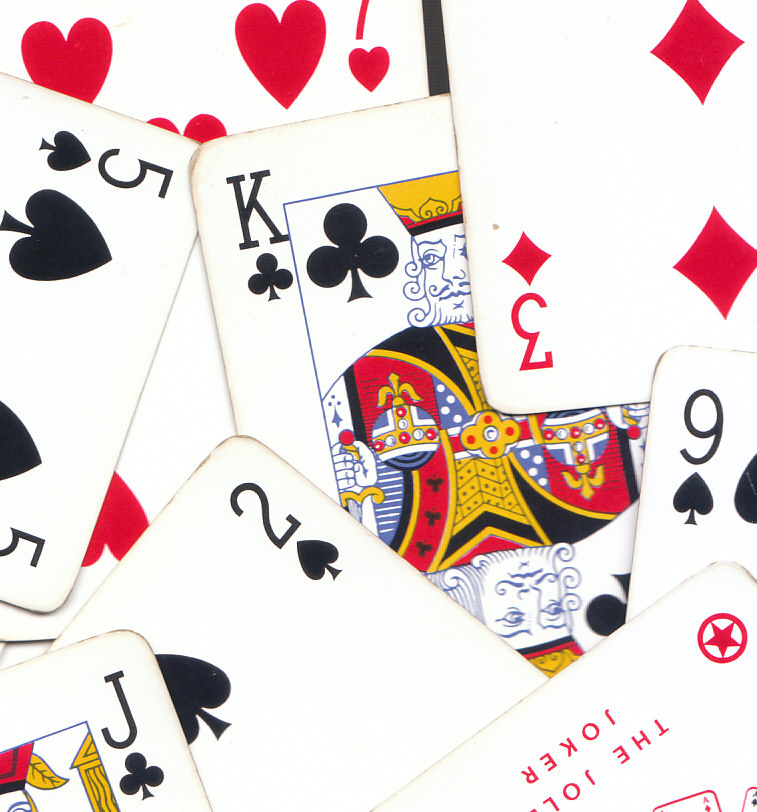
There were some infrequent entries in the card game roster, normally the ones that only work at low player counts. Speed popped up occasionally, but I never liked it; I was not near aggressive enough. We played and argued about Idiot, as we all learned the game from different sources and disagreed on which cards had which special effects.[1] Go Fish and War were games we all seemed to at some point absorb the rules of via group osmosis but never actually played. But there were two main games that dominated these family gatherings: tiến lên and Texas hold’em.
Tiến lên is the game in our family, and probably my favorite game of all time. A shedding-style card game where you try to play out your hand of 13 cards first in poker-style combinations, it’s relatively simple and quick, with games over in 5 minutes. We normally play upwards of 20 games in a row, facilitating the perfect amount of doing something together while also just kinda hanging out doing very little, but still with the swing potential for some crazy memories of games. We even have a house rule for it, a “go fish”-esque rule that adds between-game impact to already special combinations. That house rule was my first act of game design; I remember developing it with my cousins, testing variations of the rule in 5-game rounds, jotting down notes on the results and what was liked and disliked, and iterating on the initial idea until we came up with the version we have now. Even now, it usually gets trotted out at almost every family gathering, and I’m always down to play.
Texas hold’em is a rarer game, requiring more people, but one that has been a staple of family Christmases and Lunar New Years, and one that gets a bunch of the aunts and uncles involved too.[2] We have an established format: there’s a $5 buy-in, to ensure there are some stakes involved and people don’t just go all-in all-the-time with no repercussions. Everyone gets around 40 chips: we don’t attach monetary value to the chips, nor do they have differing value based on color. This means people have established their own favorite color in the set or whether they like the variety mix. The first person to lose all their chips and be knocked out has the (somewhat obligatory) option to buy back into the game by paying $5 to the person who knocked them out, encouraging early aggression to try and recoup your buy-in immediately. Encouraging early knockouts has the knock-on consequence of a quickly-raising ante, so the game can reach a somewhat speedy conclusion. But after that first knockout, there are no more buy-ins. People are slowly eliminated, and the initial pool is split between the top three players: third place always gets their $5 back and no more, and the rest of the buy-in pool is split between first and second place. Often they’ll take an even split rather than playing out the head-up poker, but otherwise it’ll get split loosely 70:30. I didn’t play in the poker games when I was much younger, scared of the prospect, but loved watching. Now, I’ve found real enjoyment in playing: I don’t think I’d ever want to play poker for major stakes, but could definitely imagine going to Vegas and treating the buy-in as the fee to play for a couple of hours and finding it worth it.
We did dabble in trading card games, but only a little. One of my cousins was into Yu-Gi-Oh, and I learned the very basic rules once or twice, but was more captivated by the thought of Exodia than navigating the fusion deck. There was also a smattering of Pokemon cards floating around,[3] but we gravitated more towards the video games.[4]
Middle School
Middle school was when card games really started popping up outside of my family. Speed was the game du jour, and I played some but it was still never something I particularly enjoyed. Instead, I remember a friend teaching me how to play hearts. We were in the afterschool program together, giving plenty of time for card games with the more lenient teachers, and hearts was at once familiar and unfamiliar in its strategy as a trick-taking game, especially with the prospect of shooting the moon. I’d struggle to remember any of my middle school teachers, but I remember that friend well: not just playing hearts, but also the book series we recommended each other.
This is also around the time I learned about Magic: the Gathering, and dabbled in the Duels of the Planeswalker video game. I never even considered attempting to play it in paper at this point: the thought seemed far off, like a thing that other people did but had no overlap with my life.
High School
Homeroom and the weird gap in time between AP exams and the school year actually ending made card games of my high school experience. There were variations of tiến lên, normally called thirteen or VC, that were decently popular but I detested, as a corruption of my beloved tiến lên but with odd rules like suit locking. Idiot was decently popular, but the main games I remember playing are, in a continuation from hearts, trick taking games. I was taught to play briškula, a game akin to hearts, with the 52-card deck modified to resemble an Italian 40-card deck, and a random trump suit you didn’t have to follow, opening up new strategies. When there were more people interested, seven of us would gather around to play seven up seven down, a name we always joked about being backwards because it plays as seven rounds, going down in card count each time, followed by seven rounds going back up in card count. Each round, you bet how many tricks you’re going to win, leading to a decent mix of both smack talk about bets while also pleading with the person who played the first card each trick, which determined trump suit, to play the card you needed to make your bet a reality.
I was also incredibly into Hearthstone all throughout high school, but it was a different kind of social, parallel rather than competitive. Friends and I talked about the game constantly, and even hung out to play once after school, but we never played against each other. Instead, we all played our own ranked matches side-by-side, glancing over at each other’s screens periodicially to become a member of the peanut gallery about one of their plays. I was properly hooked: I remember Hearthstone gave out special card backs for winning a low but not arbitrarily low number of games each month, and I think I have every card back from every month from when the game left beta up until four years later, when, immediately following graduation, for reasons instinctual and un-self-examined to this day, I stopped playing and never looked back.
College
College was where I met some of my lifelong friends. Though we never really bonded by playing card games, I do associate card games they have attempted to teach me with them very strongly: Spite and Malice, Durak, and Beulah. However, there is one card game that has stuck with and become a staple of the friend group: riichi mahjong.[5]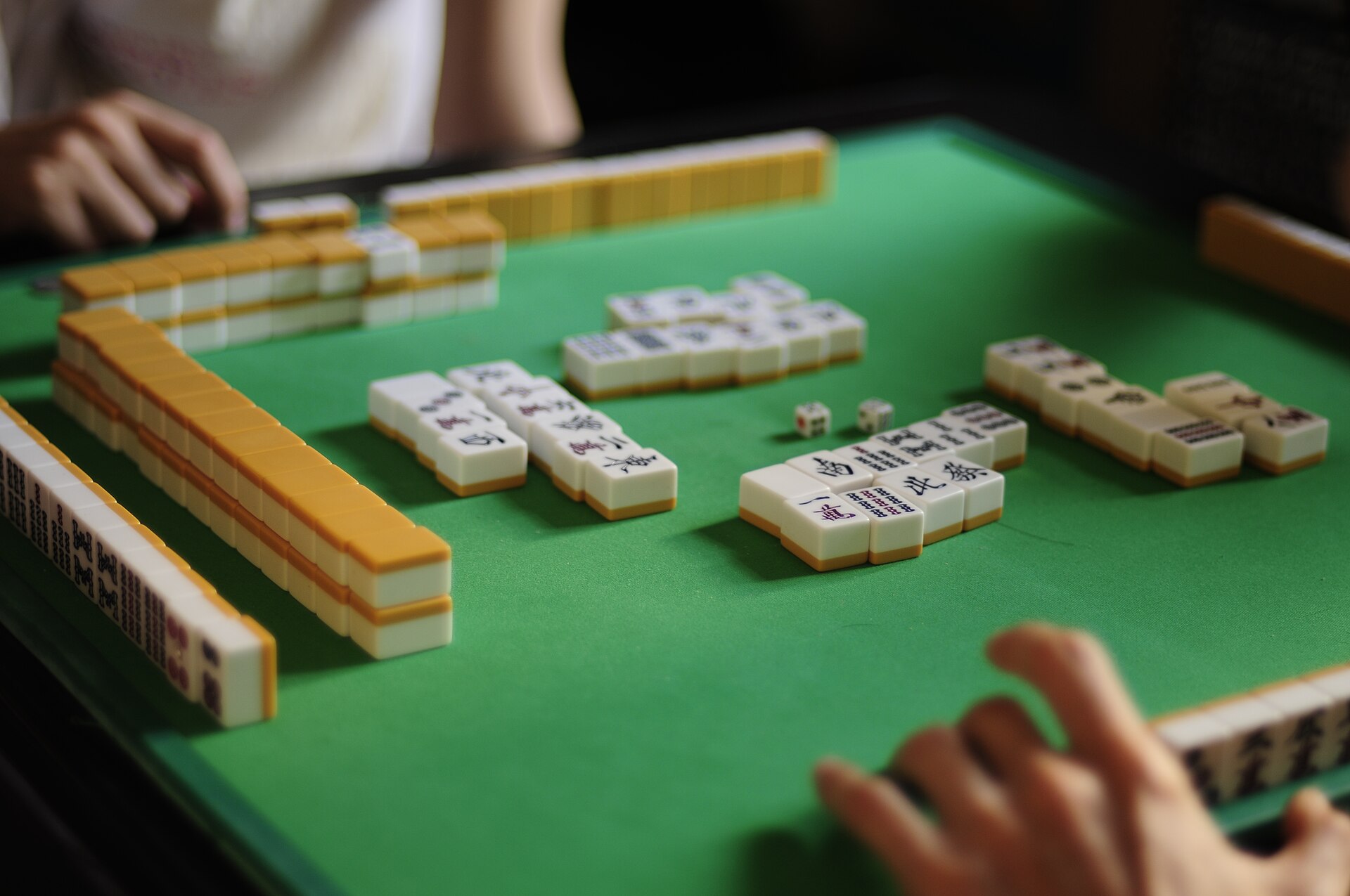
My third year of college went remote for pandemic reasons. In the fall semester, I studied from home, but some of my friends rode out that semester in a ski cabin together, and one taught the others riichi mahjong. When another group, including me, came to join them in the spring semester, those interested were inducted into late nights of riichi mahjong, while always playing polka music, for some reason. Riichi mahjong is simple enough if explained simply and also unbelievably complicated if you are thrown into the deep end. My friend made a riichi mahjong scoreboard for his final project in a microprocessors class rather than have to refer to a chart for the scoring calculations.[6] The various complications and oddities became a hub for in-jokes and lore. Now, scattered post-graduation, we still often play riichi mahjong digitally, and it’s a game I know very fondly and continue to love to play.
This time period is also when I started getting back into Magic via Arena. I enjoyed stealing a deck off the internet and jamming it until it fell out of the current standard rotation,[7] and accumulating enough gold through quests to be able to 1-3 the current draft format. Still, my insterest in Magic never went past digital. I was aware people probably played paper Magic at my college, but I didn’t quite know how to or if I was even interested in seeking them out, and left it as a post-college thing to try, which is what happened.
Family, Again
When my parents heard I had learned had to play mahjong, they reminsced about learning Vietnamese mahjong, and I arrived back home after that spring semester to a mahjong set they had dug up. We played a simplified version without any scoring besides games won, but the regional quirks still showed in the bonus flower tiles. It turned out to be a perfect pod of four: my parents, my sister and I. This was a surprisingly rare experience: my mom knows how to play tiến lên, but plays to spend time with us rather than out of real enjoyment, and never played Texas hold’em, but mahjong was the right fit for her, and we spent many nights before my sister and I scattered back across the country enjoying each other’s company and playing together.
Mahjong made my mom nostalgic about mom about other games she had enjoyed in the past, specifically chắn. I remember being toddler-little and helping my mother deal these odd skinny cards with unfamiliar characters while her mother played, but I never learned how to play. Now, I was pleasantly surprised to look at them now and find they were actually the same Chinese numbering and parallel suits as on the mahjong tiles that I already knew how to read, but in a different form. And the game itself was of the same set-creation style of mahjong, if much more streamlined.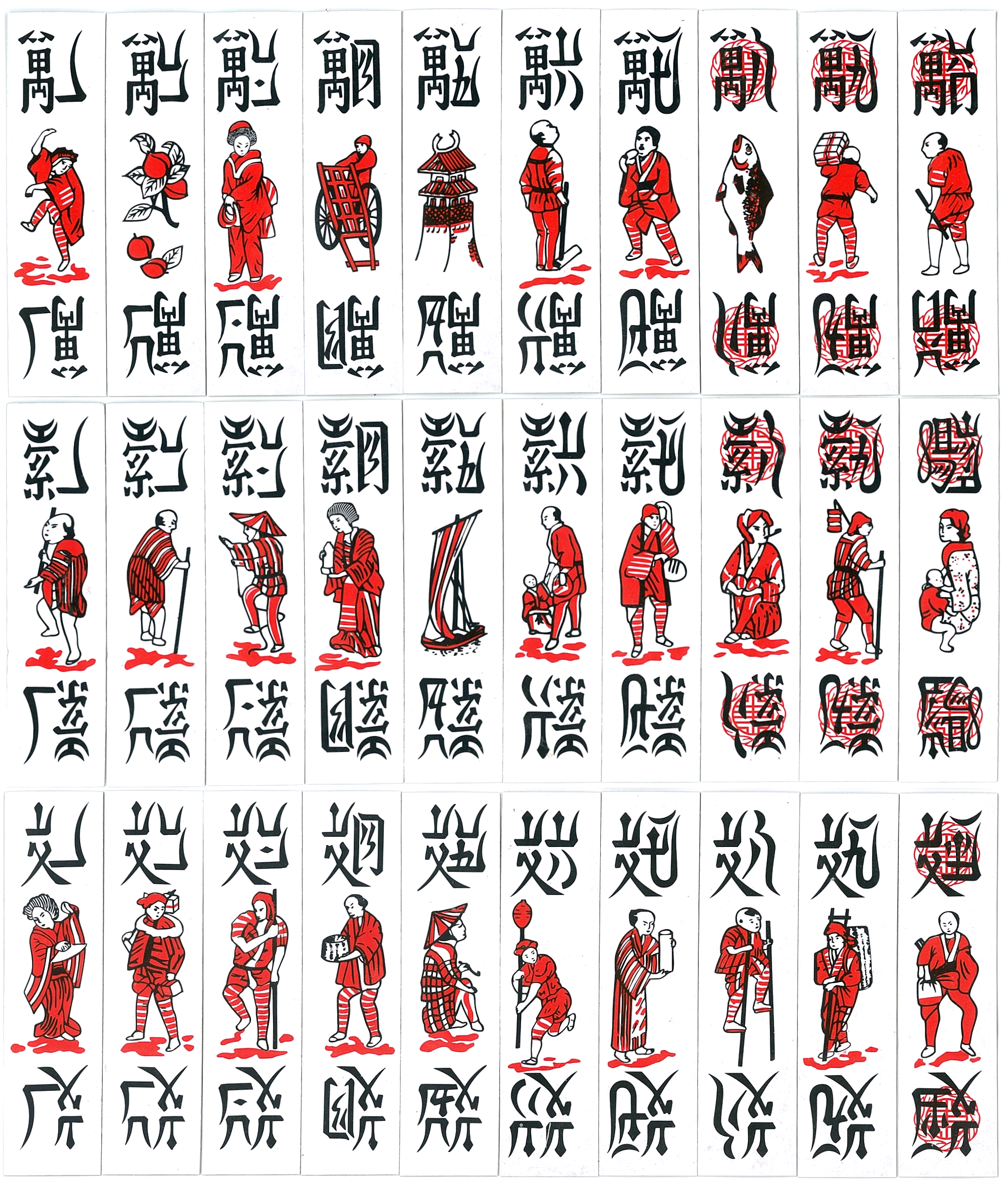
My maternal grandmother had passed on at this point, but the game turned out to be a favorite of my paternal grandmother as well, who had never been interested in any of the Texas hold’em or tiến lên happening around her my childhood. Chắn piqued her interest, and now family chắn games have become commonplace.
Meanwhile, my cousin that was into Yu-Gi-Oh when were younger has since picked up Riftbound and the One Piece TCG. I’ve enjoyed learning the games from him with my other cousins and jamming the decks he’s brought to family gatherings that are now reserved for the winter holidays, with most everyone grown up and scattered across the country.
Vietnam
At the end of last year, my family took a trip to Vietnam: my parents’ first time back since emigrating, and my sister’s and I’s first time ever. The timing was to line up with my mom’s high school reunion, and we travelled with one of her high school classmates who had also ended up in the United States and her family. She turned out to be a prolific card game player herself: she wasn’t so much into tiến lên, but enjoyed Texas Hold’em poker herself. We didn’t have the numbers, time, or resources on the trip to play poker, and instead suggested a similar game: xập xám, also known as Chinese poker. My dad, as it turns out, also knew the rules to xập xám, and taught my sister and I. We played dozens of rounds together, a familiar game in between exploring a country that was new and yet familiar to all of us to different degrees.
How All That Connects to the Title
Chinese poker was on the top of my mind when I returned to weekly cube night. One of the regulars in the group and I have a habit of proposing increasingly absurd ways to determine first player: most average dice roll is a staple, as is scooping up the oddest selection of dice and counters nearby that we can find. Odd or even collector number has been proposed but never tried. So when I recalled hearing about using poker dice to determine first player, where you roll 5 six-sided dice and try to have the best poker hand, extending that same idea to Chinese poker dice seemed natural. After a bit of workshopping on the exact rules, to both Chinese poker and Chinese poker dice, we have this.
Chinese Poker Dice to Determine Play/Draw
Required Supplies
- seven 10-sided dice in four different colors (28 dice total)
- an opaque container that can hold all the dice and that dice can be extracted from by hand without seeing the dice, e.g. a cloth bag
Instructions
- One player reaches into the container and pulls out 13 total dice. That player may look at their dice and the colors of them, but should obscure that information from the other player. The other player repeats this process. Set the container aside: there should be 2 dice remaining in it.
- Each player rolls all of their dice, keeping their rolled dice secret from the other player.
- Each player arranges their dice in one set of three and two sets of five. The sets must be arranged in order of poker hand rank, with number on the dice corresponding to rank and the color corresponding to suit, ascending from the set of three, to one of the sets of five, to the other set of five.
- For reference, the rank of poker hands are as thus, ascending: high dice, pair, two pair, three-of-a-kind, straight, flush, full house, four-of-a-kind, straight flush, royal flush. Five-of-a-kind is cool, but doesn’t get you anything.
- High dice kickers apply, highest to lowest, so a five-dice set of 2-2-6-5-1 beats a five-dice set of 2-2-6-4-3. because they both have a pair of twos and a six kicker, and then the five kicker is greater than the four kicker.
- The set of three still adheres to five-card poker hand ranks. This means the only valid hands that can exist in the set of three are high dice, pair, and three-of-a-kind. There cannot be straights or flushes in the set of three, even if they happen to be in sequence or of the same color.
- The 10 side on the d10 (which is often labelled by just a 0) can be used at the beginning or end of a straight, but not in the middle. In other words, 10-1-2-3-4 and 6-7-8-9-10 are valid straights, but 8-9-10-1-2 is not.
- Sets must be strictly increasing in terms of poker hand. This means there cannot be identically ranked sets of five (including kicker). However, extra kickers are treated as always beating a lack of dice when comparing the set of three and the sets of five: e.g. 3-3-9 and 3-3-9-1-2 would be allowable as the set of three and first set of five.[8]
- Players reveal their sets, and compare the alike sets (i.e. the set of threes are compared against one another, the middle set of five are compared against one another, and the final set of five are compared against one another). The player with the stronger set in more of the three sets than the other opponent is the winner, and can decide if they would like to play or draw. Ties are broken by the winner of the highest order set (e.g. if player A won the set of three and player B won the middle set of five, and they had identical sets for the final set of five, player B wins because the middle set of five is higher-order than the set of three). If every single set is tied: first, wow. Second, just start over and try again.
Conclusion
Some of you may have questions. Like: is this method fast? Is it convenient? Is it guaranteed to work? Perhaps most importantly, is this a fair way to determine first player? The answer to all of these questions can be found by reading the rules above, but for convenience’s sake: absolutely not. There are a bunch of steps involved, it’s decently fussy, and requires supplies that aren’t typically expected to be at a cube night. There is a good deal of randomness, but also there is definitely some level of skill involved, and a more experienced player is at a huge advantage.
But, per the Comprehensive Rules of Magic (as of Feb 27, 2026), rule 103.1:
103.1. At the start of a game, the players determine which one of them will choose who takes the first turn. In the first game of a match (including a single-game match), the players may use any mutually agreeable method (flipping a coin, rolling dice, etc.) to do so. In a match of several games, the loser of the previous game chooses who takes the first turn. If the previous game was a draw, the player who made the choice in that game makes the choice in this game. The player chosen to take the first turn is the starting player. The game’s default turn order begins with the starting player and proceeds clockwise.
So, as long as everyone agrees to it, it’s fair game. Well, not exactly fair game, but you know. Only tournament rules require a random way to determine first player:
2.2 Play/Draw Rule For the first game of a match, a designated player - the winner of a random method (such as a die roll or coin toss) during Swiss rounds, or the player ranked higher at the end of Swiss rounds during playoff matches - chooses either to play first or to play second. They must state this choice before looking at their hand. If they state no choice, it is assumed that they are playing first. The player who plays first skips the draw step of their first turn. This is referred to as the play/draw rule.
So, why would you want to use Chinese poker dice to determine first player? Well, honestly, I think if you aren’t already interested in this point, I will never have anything to convince you to want to. But I_know I want to do it. For commitment the bit, for this culmination of months of first-player-shenanigans, for this reminder and homage that Magic is a game just like all these others that lattice through my life and I treasure so fondly, one where people shine more brightly than the games.
In fact, if all goes well, I’ll be piloting this method at my own cube night tonight.[9] It might be a silly thing we do for one night and one night only, it might become a tradition. Either way, it’ll be a fun memory for The Gathering, if not for the Magic.
Footnotes
I remember 2, 7, and 10 having special effects, but cannot off the top of my head remember what they are. ↩︎
I joke that it was a way for adults to win back the money they gave to the kids on those holidays. I have no idea how much a joke that actually is. ↩︎
I distinctly remember a fake card with “Lation” instead of Latios, a nickname that has stuck with me 'til this day. ↩︎
I remember my first time playing Pokemon was my cousin’s copy of Pokemon Emerald on a Gameboy Micro. The screen was cracked so the right third of the screen was black, so the visible area was legitimately the size of postage stamp. Still, we were hooked enough that my sister and I wheedled my parents into getting us Nintendo DSi’s, and I wheedled my sister enough that I got the Pokemon Diamond we both wanted and she got Pokemon Pearl instead. She then got to opt for Pokemon White though we both wanted Reshiram, while I picked up Pokemon Black, starting a tradition of us alternating each generation who gets to pick the version they want, with the other graabbing the other version. ↩︎
Yes, mahjong is a card game even though you use tiles, you can’t change my mind. ↩︎
I still do not understand everything that gets you fu and hope I will never have to. ↩︎
The decks I remember most: an Orzhov vampires deck during Ixalan and an Izzet draw-two spellslingers deck during Eldraine. ↩︎
If you have this combination of dice though, I probably wouldn’t recommend this as the arrangement. ↩︎
The current date is a complete coincidence as to why today is the debut of this method. ↩︎